
The rule players already know
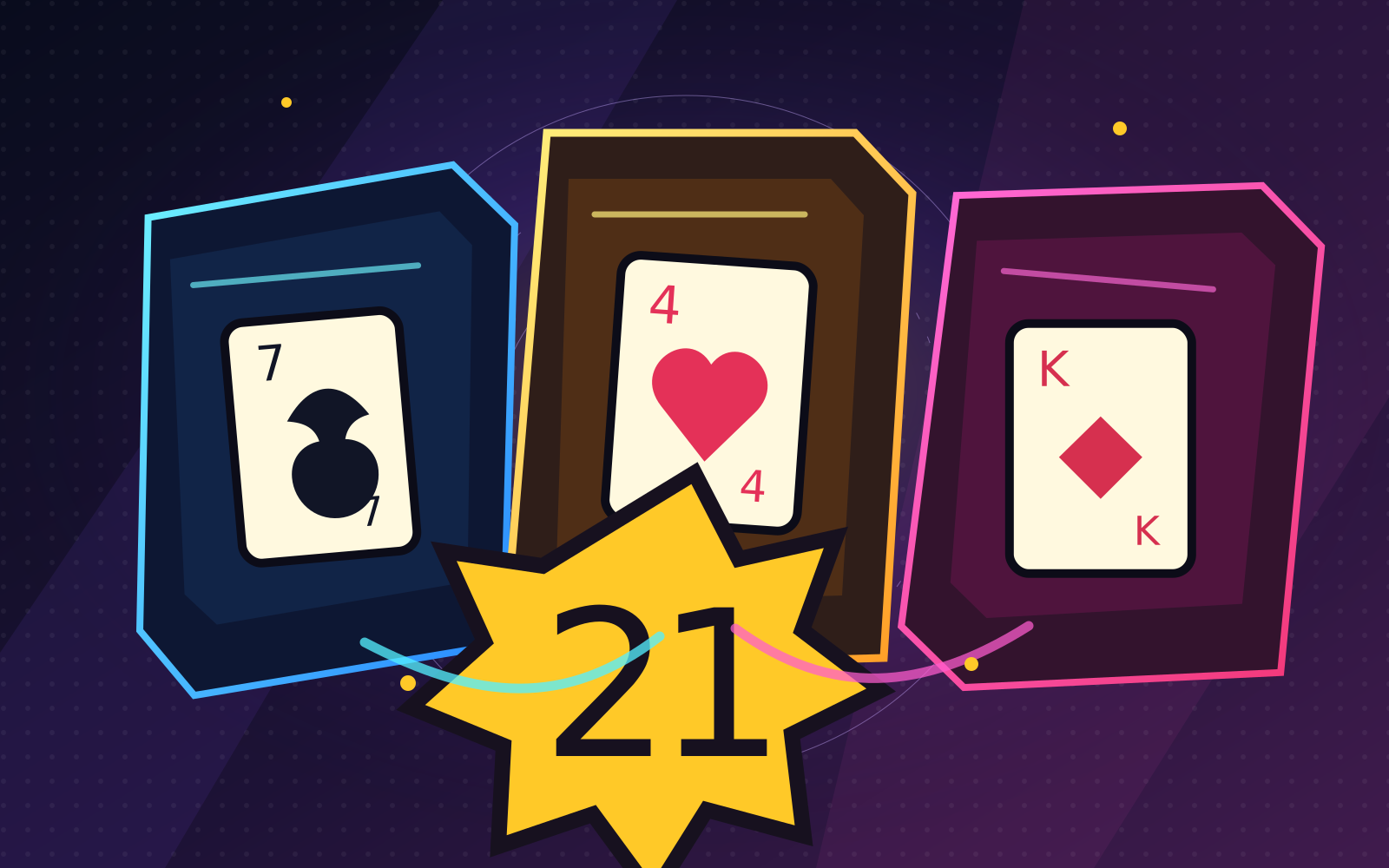
Rift 21 begins with familiar twenty-one arithmetic, then changes the meaning of each card through the circuit it enters. The goal is not to reproduce casino blackjack; it is to use a recognizable rule as the doorway into a strategic roguelite.
Three circuits create parallel decisions, exact 21s create high-value moments, and the run economy determines how aggressively the player can build around those opportunities.
Making powers feel collectible
Charms are planned as illustrated, characterful power cards rather than generic upgrade tiles. Card Imprints change individual cards, creating a different layer of commitment and memory within a run.
Booster rewards are designed as sealed sleeves instead of another row of shop items. The opening moment should feel like receiving a small physical pack, with anticipation and hierarchy built into the presentation.
What the MVP must prove
The next build must demonstrate that routing, exact totals, powers, and scarce currency create readable decisions without overwhelming the player.
Final balance, content volume, art production, platforms, monetization, and release timing remain open until the MVP proves the core run is worth expanding.